
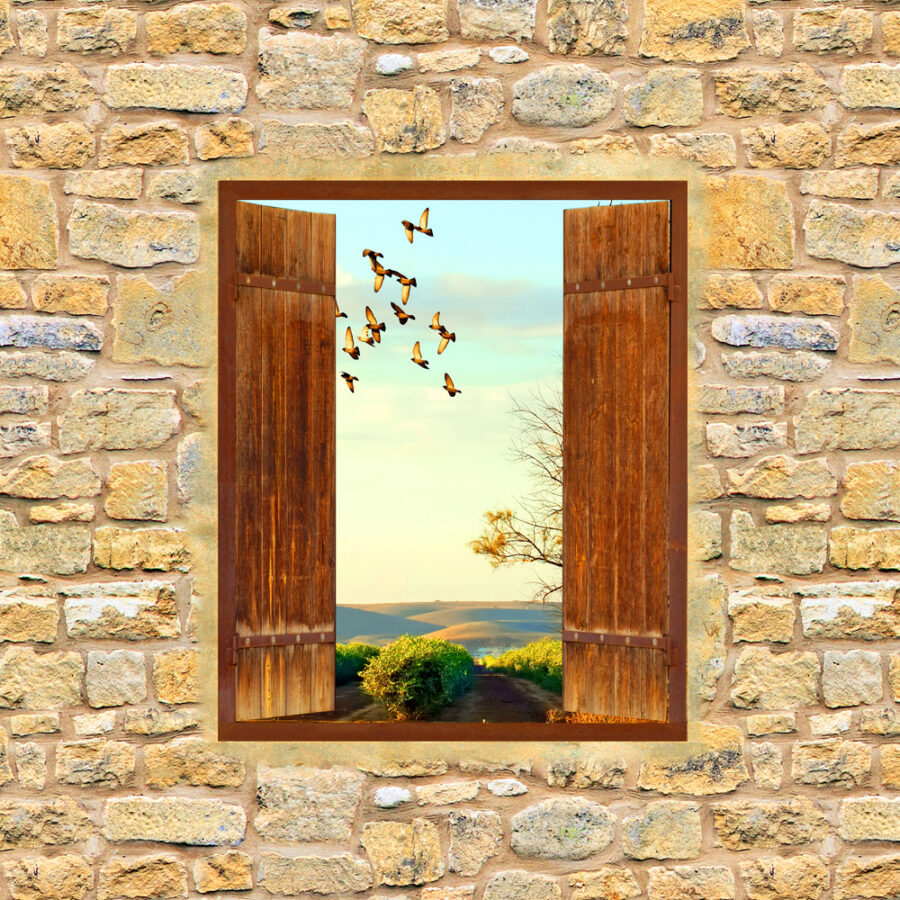
What Italian Homes Reveal About Their Inhabitants
When you stroll through an Italian village, you quickly notice here, houses tell stories. Stories of generations, of pride, of community — and of the unmistakable Italian instinct for beauty and authenticity. Whether it’s a city palazzo in Florence, a farmhouse in Tuscany or a whitewashed trullo in Apulia — every home expresses an attitude: to live, to create, to enjoy. Look a little closer and you’ll see: architecture is never neutral. It reveals how people live — and how they think.
Architecture as a Mirror of the Soul
In Italy, living is an art form — not luxurious, but sensual. Houses are not anonymous structures; they are mirrors of their inhabitants. From peeling plaster to fragrant basil on the windowsill — everything tells a story of personality, pride and the past. Italian homes are like the people who live in them: distinctive, spirited, unpolished — and full of character.
The Soul of Stone: Homes with History
An old farmhouse in the countryside carries memories of the rhythm of the seasons, of childhood, of conversations by the hearth. In Rome, palazzi with painted ceilings hold the voices of centuries past. And a fisherman’s house by the coast still carries the scent of salt within its walls. Italian houses age with dignity. Plaster may crumble; colours may fade — because authenticity matters more than perfection. These stones contain history — tangible, visible, alive.
The Face of the House: Façade and Entrance
In Italy, houses are not silent walls. Their façades have faces — each with a different expression.
In Venice, colourful walls reflect in the water, while the houses whisper tales of love, trade and secrets. In Rome, sun-worn walls and heavy shutters seem both dignified and alive. In Lecce, baroque sandstone glows like honey in the evening light — every house a work of art.
Entrances speak, too: a solid wooden door, a wrought-iron gate or strings of colourful beads — each doorway an invitation. In small villages, doors often remain open. Not out of carelessness, but out of trust. Hospitality in Italy begins not in the living room, but at the threshold.
Courtyards & Balconies: Spaces for Connection and Retreat
The courtyard — especially in the South — is both the heart and a place of retreat. Here, laundry dries, children play, cats nap, neighbours chat. In the evening, the cortile becomes a stage of everyday life, where cooking, storytelling and laughter unfold. It is not private in the strict sense — but open to the community.
The balcony, on the other hand, is the stage for small dramas. People observe, call down to the street, argue, smile. It is an outdoor living room, a place for plants, laundry lines and cigarette breaks — a quiet channel of communication between inner life and the street.
The Kitchen — Centrepiece and Identity
To understand who lives in a house, you should look at the kitchen. In Italy, it’s not just a functional room — it is the centre of everything. Here, people cook, laugh, argue, reconcile. The fragrance of soffritto, the clatter of dishes, the warmth of the oven — that is home.
A large table is essential. It is where stories are shared, family ties strengthened, guests welcomed. In Italy, eating is never merely nourishment — it is affection. Whoever shares the table shares the heart.
Colours, Sounds, Scents — the Sensory Home
Italian homes are multisensory spaces. They live through colour, sound and scent. Walls glow in terracotta, Siena red or ochre — warm like earth and sun. The air smells of coffee, olive oil, lemon zest, fresh laundry. In the distance, a Vespa hums, bells ring, someone sings behind open shutters. These homes aren’t decorated — they’re lived in. They bear the marks of life, not of styling. And that is precisely what makes them special.
Regional Differences: Houses Speak Dialects
Italy is a land of architectural dialects — and every region has its own voice: In the North, stone houses with shingle roofs dominate. Clean lines, Alpine grace, craftsmanship. People here tend to be traditional, orderly, proud of quality. In the Centre — Tuscany, Umbria, Lazio — rustic elegance meets warm colours. Open kitchens, harmonious proportions, abundant light. People who love conviviality and aesthetics live here. In the South, architecture mirrors the climate: white walls, flat roofs, courtyards full of life. Here, living means openness, flexibility, community. Spontaneity is part of the domestic atmosphere.
The Art of Living
In Italy, living is not about status but about atmosphere. A home is not a showroom — it is a space that breathes, evolves, changes. Patina is allowed. Traces of time are welcome. Because a house should be more than a building — it should evoke a feeling. And that can only happen when function and emotion coexist.
Holiday Homes: From Dream to Temporary Home
Many who visit Italy fall not only in love with the landscape, but with the way of life —
and they rent a holiday home to experience a piece of it. Whether converted barn, trullo or town house: life slows down here. The day begins with an espresso on the terrace, continues with a trip to the market, ends with homemade pasta and cicada song. A holiday home is not just accommodation — it is an invitation to live like an Italian. Not just to travel, but to linger, feel, and belong.
Homes as Reflections of Values
What does a house reveal about its inhabitants? Quite a lot. Here are a few examples, poetically interpreted:
- A townhouse in Rome: traditional, art-loving, sociable — life is a daily artwork.
- A farmhouse in Tuscany: grounded, hospitable — what counts is authenticity, not grandeur.
- A trullo in Apulia: creative, nature-oriented, freedom-loving — life in harmony with the earth.
- A villa on Lake Como: elegant, organized, family-focused — a balance of beauty and structure.
- A fisherman’s house by the coast: spontaneous, open, relaxed — life flows like the sea.
Every house has its own signature — honest, individual, emotional.
Between Stone and Soul: What “Home” Means
In Italy, home is not a possession — it is a feeling. Familiar scents, known voices, neighbours who greet you by name — that is what creates a sense of belonging.
Perhaps that is the magic of Italian houses: they are not perfect. But they are real. They carry the life of their inhabitants — with all its highs, lows, moods and bright moments.
Conclusion: Houses Like People — Beautiful Because They Live
Italian houses are not mere buildings — they are characters. Some proud, some simple, some wild and romantic. Yet they share one thing: they are infused with life.
And when you enter such a house, you feel it immediately: this place wasn’t just lived in. It was lived.
Maybe that’s the loveliest lesson Italy teaches us:
It’s not the house that makes the person — it’s the person who makes the home.